
Thomas Nast and Santa Claus
Thomas Nast was a 19th-century German-born American cartoonist and caricaturist who is considered to be the “Father of the American Cartoon.” He is best known for his political cartoons, which appeared regularly in Harper’s Weekly and were a major influence on public opinion during the Civil War and Reconstruction eras. Nast’s cartoons were among the first to portray Santa Claus as a plump, jolly old man with a white beard and a red suit, and his illustration of the Republican elephant and the Democratic donkey are still used today. Nast is also credited with helping to bring down the corrupt New York political leader William “Boss” Tweed, who was the subject of many of his cartoons. He is often credited with creating the modern image of Santa Claus, although his portrayal was not the first and was actually based on earlier depictions of the jolly, gift-giving figure.
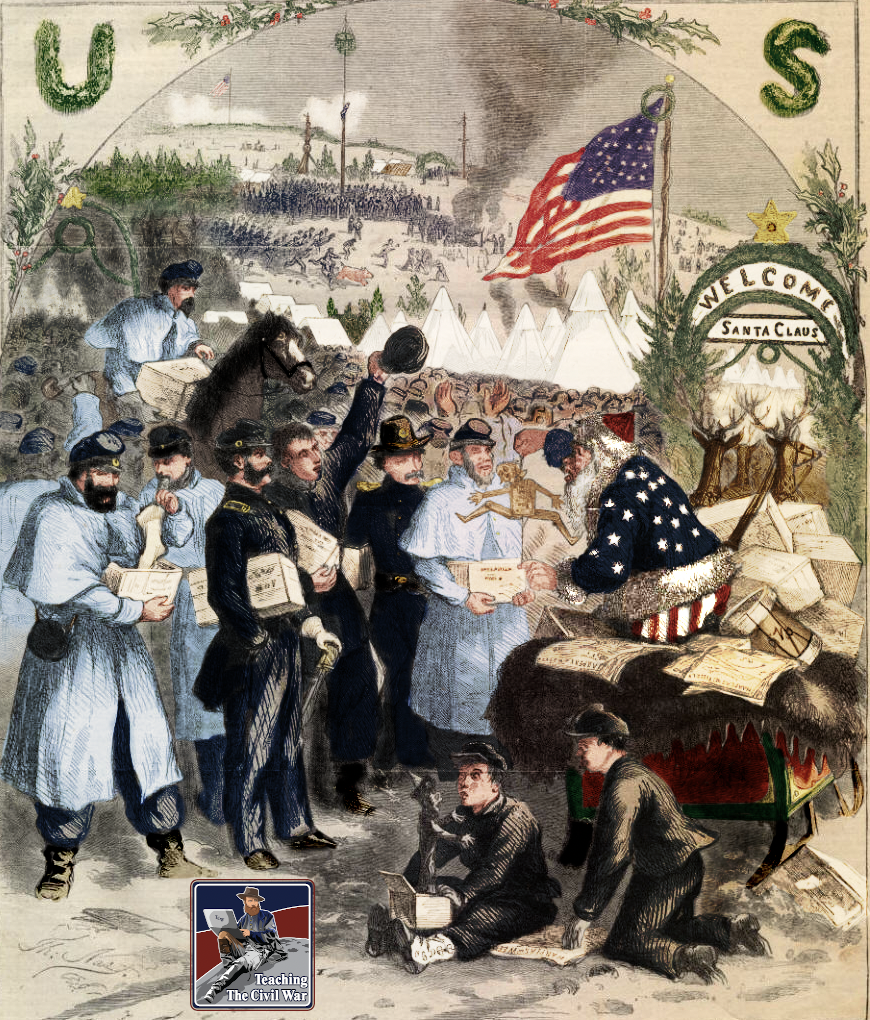 Nast’s first published drawing of Santa Claus appeared in Harper’s Weekly in 1862, in a cartoon titled “Santa Claus and His Works.” In this drawing, Santa is depicted as a small, chubby figure with a long white beard, wearing a red suit and carrying a sack of toys. Nast’s Santa Claus is based on a number of different sources, including the Dutch legend of Sinterklaas, British and American Christmas traditions, and the Christian bishop Saint Nicholas. Sinterklaas, also known as St. Nicholas, was a historical figure who was known for his generosity and kindness, and he is the source of many of the modern Santa Claus’s attributes, such as his love of children and his association with Christmas. The British tradition of Father Christmas, a jolly old man who brings gifts to children at Christmas time, also influenced the modern image of Santa Claus.
Over the next several years, Nast continued to draw Santa Claus in various cartoons and illustrations for Harper’s Weekly. His portrayals of Santa became increasingly popular and were widely reprinted in newspapers and magazines across the country. By the 1870s, Nast’s image of Santa had become the dominant one in American popular culture.
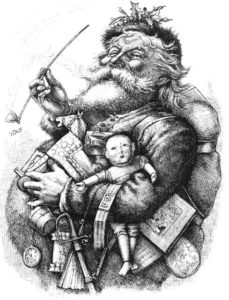 One of the most famous of Nast’s Santa Claus illustrations is a drawing titled “Merry Old Santa Claus” that appeared in Harper’s Weekly in 1881. In this drawing, Santa is shown sitting in his workshop, surrounded by toys and children. This image helped to cement the idea of Santa as a jolly, kind-hearted figure who brings joy to children on Christmas.
Despite his important role in shaping the modern image of Santa Claus, Nast was not the only artist to depict the figure during this time. Other artists, including Haddon Sundblom and J.C. Leyendecker, also contributed to the development of the Santa Claus character.
Nast’s influence on the image of Santa Claus can still be seen today, in the many variations on the traditional Santa Claus costume that are worn by people around the world during the Christmas season. His portrayals of Santa Claus helped to create the enduring image of a jolly, white-bearded man in a red suit who brings gifts to children on Christmas Eve.

0 Comments