
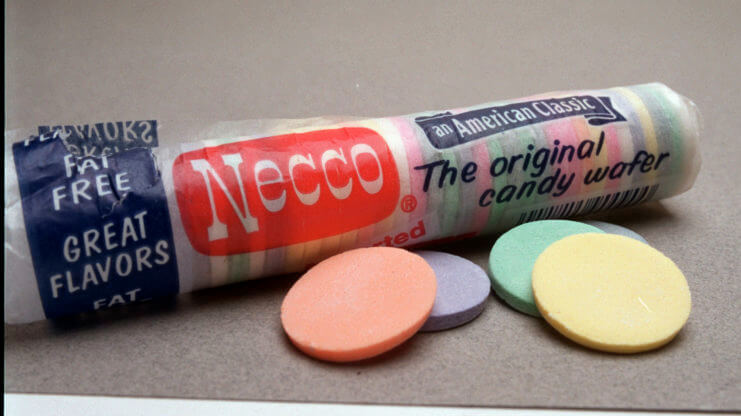
 Have you ever wondered how a simple candy can be tied to history? Recently, my daughter surprised me with a pack of NECCO wafers, and it got me thinking about their fascinating past, including their connection to the Civil War!
In 1847, English immigrant Oliver Chase invented the first American candy machine, a lozenge cutter, which laid the groundwork for creating tiny, disc-shaped candies like NECCO wafers. This innovation came more than a decade before the Civil War, paving the way for these unique sweets.
Chase, along with his brother Silas Edwin, founded Chase and Company, initially producing what were known as Hub Wafers. These candies quickly gained popularity, but their fame skyrocketed during the Civil War when they were distributed to Union Army soldiers. The wafers were compact, lightweight, durable, and non-perishable—ideal qualities for military rations. Their pleasant flavor also provided a small psychological boost to the soldiers in the heat of battle.
It wasn’t until the 1900s that the wafers received their current name. In 1901, Chase and Company merged with Forbes, Hayward & Company, and Wright & Moody to form the New England Confectionary Company, or NECCO. By 1912, Hub Wafers were renamed NECCO Wafers.
The story of NECCO Wafers doesn’t end there. In 1930, two tons of these wafers were taken on an expedition to the South Pole, highlighting their long-lasting qualities. During World War II, NECCO Wafers were again in the spotlight, as the U.S. government ordered large quantities for soldiers fighting across the globe. This widespread distribution introduced the candy to many new fans.
After World War II, NECCO Wafers enjoyed a surge in popularity, much like they did after the Civil War. Despite a dip in fortunes and a bankruptcy declaration in 2018, the Spangler Candy Company acquired NECCO and has since resumed production of these iconic wafers.
For Educators: Exploring History Through Candy
- Historical Context: Use NECCO Wafers as a starting point to explore innovations during the 19th and 20th centuries. Discuss how technological advancements, like the lozenge cutter, impacted everyday life and historical events.
- Civil War Connections: Incorporate NECCO Wafers into lessons about the Civil War. Examine how the logistics of supplying armies with non-perishable food items affected soldiers’ morale and daily life.
- Science and Engineering: Explore the science behind the preservation qualities of NECCO Wafers. Engage students in activities that investigate why certain foods last longer and how modern preservation methods compare to those used in the past.
- Economic Impact: Analyze how NECCO Wafers’ popularity during and after the Civil War influenced the candy industry. Discuss how wartime demands can shift consumer products and economic patterns.
- Cultural Legacy: Investigate the cultural significance of NECCO Wafers and their role in American history. Encourage students to research other historical products with enduring legacies and their impact on society.
NECCO Wafers offer a sweet way to delve into history, blending technology, war, and cultural trends into one tasty package. Happy teaching!
Feel free to share how you incorporate historical candies or other unique items into your lessons in the comments below!


0 Comments