
Cartoon Time Travelers: Bringing the Civil War to Life with AI and Imagination
Teaching the American Civil War can be a powerful experience—but for younger learners especially, the names and events can sometimes feel distant or abstract. What if we could make history more personal, visual, and fun?
In this blog post, I’ll show you how to turn Civil War figures into classroom-friendly cartoons using AI tools like ChatGPT or Google’s Gemini, while also reinforcing essential historical understanding. This project blends historical research, creative storytelling, and visual learning—and it’s sure to spark student curiosity.
Objective:
Students will research a key figure from the Civil War, write a creative prompt to generate a cartoon image, and reflect on that figure’s legacy through caption writing and discussion.
Essential Questions:
- Who were the people behind the Civil War’s major decisions and movements?
- What makes someone a “superstar” in history?
- How can we creatively represent the past while staying historically accurate?
Materials Needed:
- Access to ChatGPT with image generation or drawing software
- Printed or digital copies of the Civil War Superstars Worksheet
- Internet access or classroom books for research
- Google Docs or Canva (optional for digital submissions)
Instructional Steps
1. Pick a Civil War Figure
- Abraham Lincoln
- Harriet Tubman
- Ulysses S. Grant
- Robert E. Lee
- Clara Barton
- Frederick Douglass
- Jefferson Davis
- William Tecumseh Sherman
Let students choose someone that interests them or assign them based on classroom themes (e.g., leaders, activists, medical workers).
2. Research and Record
- Using the worksheet, students will:
- Identify basic facts (name, side, role in the war)
- Explain why the person is important
- Share one surprising or lesser-known fact
- Encourage students to use both traditional sources and reputable websites. For younger grades, create scaffolded fact sheets to support their exploration.
3. Generate a Cartoon Image
- Students write a cartoon-style prompt using descriptive language. Then, use ChatGPT, Google’s Gemini, or another AI image generator to bring the character to life.
Sample Prompts:
- “Create a cartoon of Harriet Tubman in Civil War-era clothes, holding a lantern and a map, guiding people through the Underground Railroad at night.”
- “Draw Abraham Lincoln in his top hat and long coat, standing in front of the White House with a welcoming expression.”
- “Make a cartoon of Ulysses S. Grant in his Union uniform, standing on a muddy battlefield with a cigar and a determined look.”
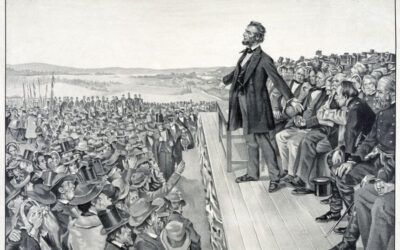
- “Illustrate Abraham Lincoln giving the Gettysburg Address to a crowd, with his speech in hand.”
Tip: Encourage students to think like a movie director—What’s in the background? What is the character wearing? What emotion should be shown?
4. Add a Quote or Caption
Students pair their cartoon image with a quote or original caption. This step helps them connect words with visuals and demonstrate historical understanding.
Examples:
- “I freed a thousand slaves—I could have freed a thousand more, if only they knew they were slaves.” – often attributed to Tubman
- “With malice toward none, with charity for all…” – Abraham Lincoln
- “No terms except unconditional and immediate surrender.” – Ulysses S. Grant
5. Reflect and Present
Ask students to write a short reflection or present their work to the class:
- What did you learn about this person?
- What do you want others to remember about them?
- If this person were alive today, what might they say?
Use bulletin boards, slideshow presentations, or a digital class gallery to share final products!
Teaching Tips
Cross-Curricular Tie-Ins: Connect with ELA (narrative writing, speech analysis) or Art (cartooning, symbolism).
Differentiation: Allow students to work in pairs or offer a list of simplified facts for younger learners.
Extension Idea: Have students write a short comic strip starring their Civil War figure as a time traveler visiting modern America.
Example Cartoon Images
Here are a few student-style prompts we turned into cartoon images using ChatGPT’s image generation tools:
- Harriet Tubman at Night with a Lantern
- Abraham Lincoln delivering the Gettysburg Address
- Ulysses S. Grant on the Battlefield
Final Thoughts

This project turns historical learning into an interactive and imaginative journey. By humanizing Civil War figures and letting students direct the “scenes,” we help history come alive—and stay memorable.
Try this in your classroom and let your students become historical cartoonists and storytellers!


0 Comments