As social studies educators, we often look for ways to make history relatable to our students. One such way is by exploring the everyday lives of people from the past, connecting their experiences to the present. Just as many of us start our day with a cup of coffee,...
Ever wonder what the Gettysburg Address would sound like if Dr. Seuss was Abraham Lincoln’s speech writer? Well, I asked ChatGPT and here are the results: Oh say can you see, what happened long ago? Our founding fathers fought, for freedom to flow....
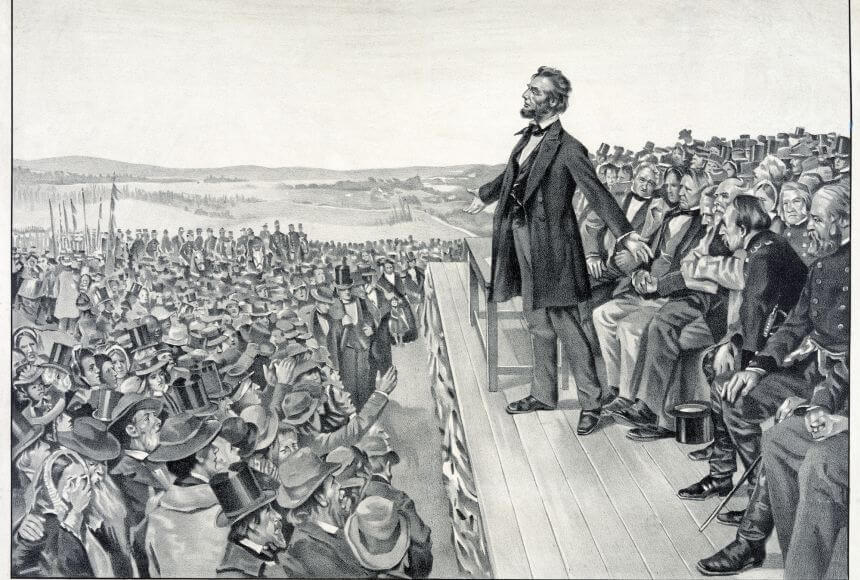
Teaching the Gettysburg Address: Structure, Meaning, and Purpose On November 19, 1863, President Abraham Lincoln delivered the Gettysburg Address at the dedication of the Soldiers’ National Cemetery in Gettysburg, Pennsylvania. The ceremony honored the Union soldiers...
If the 12-pounder Model 1857 Napoleon Gun-Howitzer was the premier smoothbore artillery piece used during the American Civil War, the 3″ Ordnance Rifle was the most widely used rifled artillery piece. Another common rifled piece was the 10-pound Parrott Rifle....
Cartoon Time Travelers: Bringing the Civil War to Life with AI and Imagination Teaching the American Civil War can be a powerful experience—but for younger learners especially, the names and events can sometimes feel distant or abstract. What if we could make history...
Middle school students often enjoy lessons that combine history with practical problem-solving. The Battle of Antietam offers one such opportunity. By focusing on Burnside’s Bridge, teachers can connect social studies with mathematics in ways that promote both...