
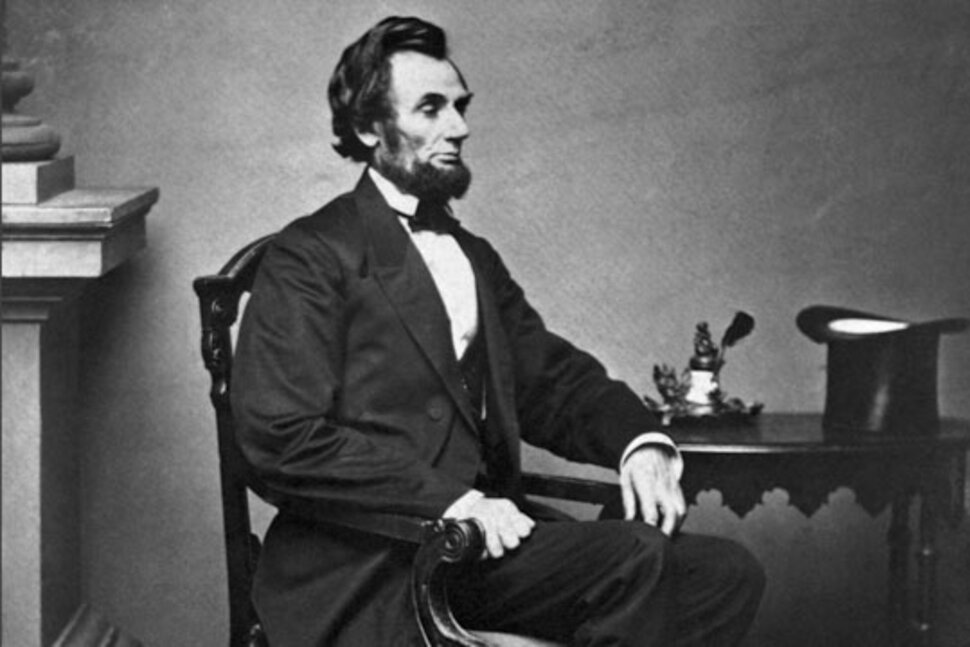
 Abraham Lincoln is one of the most famous and revered figures in American history. As the 16th President of the United States, he led the country through one of its most tumultuous periods, the Civil War, and played a pivotal role in the abolition of slavery. However, Lincoln’s legacy extends far beyond his leadership during the Civil War, as he also had a keen interest in technology and its potential to shape society.
Lincoln was fascinated by the telegraph, a revolutionary new technology that allowed messages to be sent over long distances in a matter of seconds. In his early career as a lawyer, he used the telegraph to communicate with clients and colleagues across the country, and he was quick to recognize the potential of this new technology to transform the way people lived and worked.
In a speech to the House of Representatives in 1848, Lincoln spoke of the telegraph as a means of connecting people and ideas across vast distances: “By the help of the telegraph, the scattered and isolated thoughts of individuals are concentrated, and a thousand minds are brought into simultaneous action, bearing upon a common point.” He saw the telegraph as a powerful tool for bringing people together and advancing the cause of progress.
However, Lincoln was not blind to the potential dangers of technology, particularly when it came to the impact it could have on the workforce. In a speech to the Wisconsin State Agricultural Society in 1859, he warned of the threat that new machinery posed to farmers: “The introduction of labor-saving machines into agriculture, is rapidly reducing the number of hands employed in farming. In some portions of the country, whole districts have been depopulated by this cause alone.” Lincoln recognized that technology could disrupt established ways of life and create new challenges for workers and communities.
Despite his concerns, Lincoln remained a strong advocate for technological progress, and he was particularly interested in the potential of wind energy as a source of power. In a letter to a friend in 1860, he wrote, “I am not an accomplished literary man, but I have a good deal of practical sense and a good deal of judgment in the selection of men…I think it would be a great idea to use wind power for running all kinds of machinery.” Lincoln saw wind energy as a clean and renewable source of power that could help to reduce the country’s dependence on fossil fuels.
Lincoln’s vision for the future was one in which technology played a central role in shaping society, but he also recognized that progress must be balanced with social responsibility. In his second inaugural address in 1865, he spoke of the need for reconciliation and healing in the aftermath of the Civil War: “With malice toward none, with charity for all, with firmness in the right as God gives us to see the right, let us strive on to finish the work we are in, to bind up the nation’s wounds.”
Historians and authors have written extensively about Lincoln’s views on technology and its role in society. In his book “Lincoln and the Power of the Press,” Harold Holzer argues that Lincoln’s use of the telegraph was instrumental in his ability to communicate with the American people and lead the country through the Civil War. Holzer writes, “The telegraph allowed Lincoln to keep his finger on the pulse of the nation, to communicate with his generals, and to keep the Union informed about the progress of the war.”
Similarly, in her book “The Age of Lincoln,” Orville Vernon Burton writes that Lincoln was deeply interested in the potential of new technologies, but he also recognized the challenges they posed to workers and communities. Burton notes that Lincoln was “a pragmatic progressive who saw the need for balancing technological progress with social responsibility.”



0 Comments