
Teaching the Gettysburg Address: Structure, Meaning, and Purpose
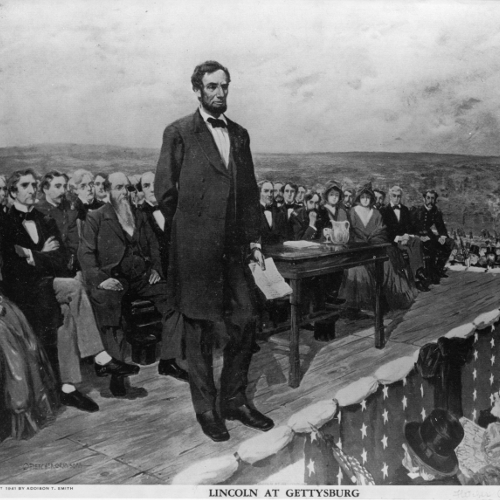
On November 19, 1863, President Abraham Lincoln delivered the Gettysburg Address at the dedication of the Soldiers’ National Cemetery in Gettysburg, Pennsylvania. The ceremony honored the Union soldiers who had fallen in one of the Civil War’s bloodiest battles. Lincoln spoke for less than three minutes, yet his 272 words redefined the purpose of the war and the meaning of the American experiment. For teachers, understanding how Lincoln built this speech is essential for helping students see how language, structure, and purpose work together to convey powerful ideas.
Historical Context
The Battle of Gettysburg took place from July 1 to July 3, 1863, and marked a turning point in the Civil War. Over 50,000 soldiers were killed, wounded, or missing. In the aftermath, Pennsylvania’s governor and local leaders planned a cemetery for Union dead and invited Lincoln to deliver a few “appropriate remarks.” Expectations were low. The main speaker, Edward Everett, spoke for over two hours. Lincoln followed with a brief address that reframed the war as a test of the nation’s founding principles.
Structure of the Speech
The Gettysburg Address has three paragraphs, each focused on a distinct time frame—past, present, and future. The shift in tense mirrors Lincoln’s larger argument about national renewal.
Paragraph 1: The Past
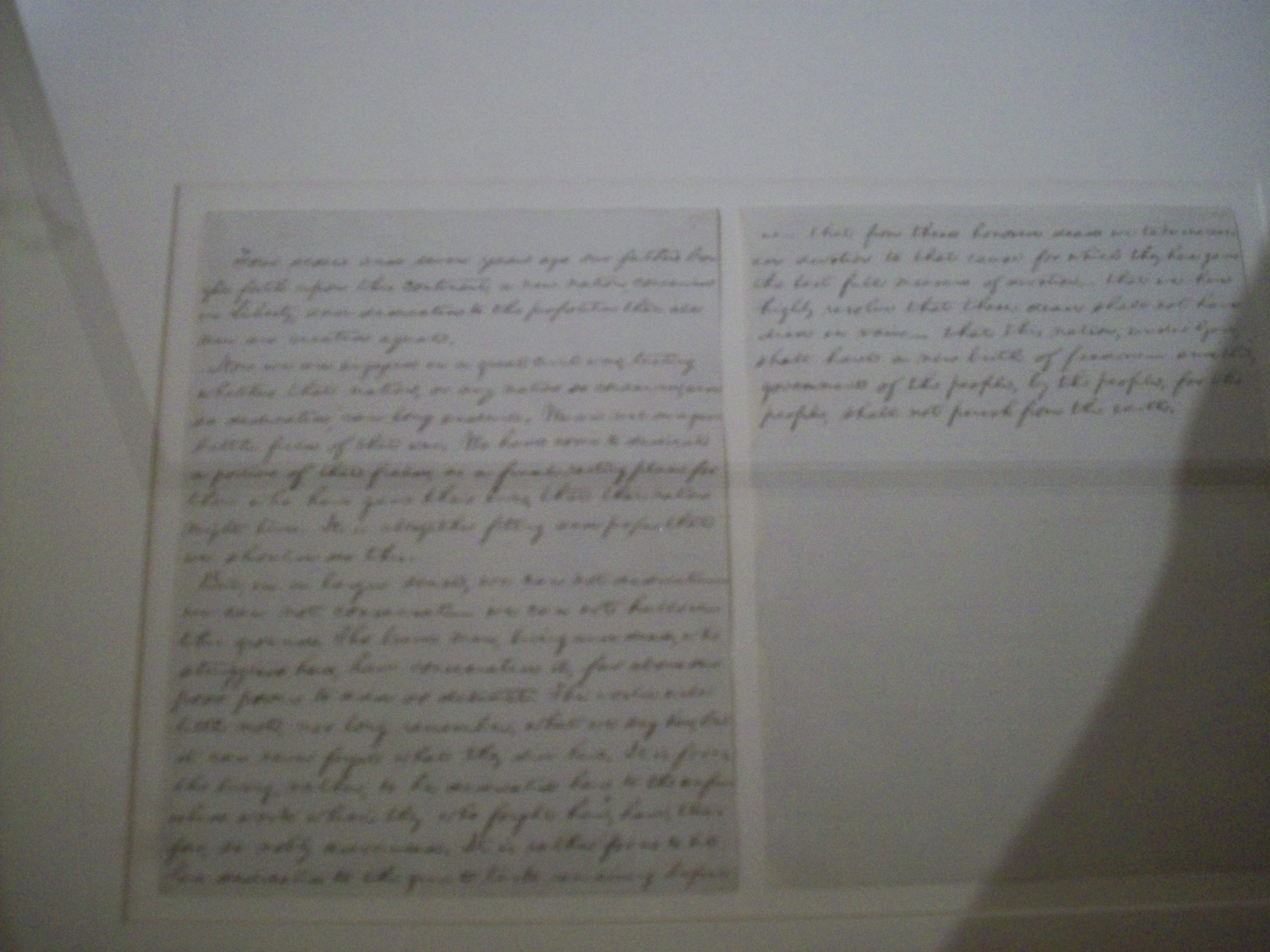
“Four score and seven years ago our fathers brought forth on this continent, a new nation, conceived in Liberty, and dedicated to the proposition that all men are created equal.”
Lincoln begins by identifying 1776, the year of the Declaration of Independence, as the true founding of the United States. His choice of “conceived” and “dedicated” suggests birth and purpose. America was founded on an idea, not on geography or ancestry. The brevity of this paragraph reflects how that founding moment had faded from living memory by 1863. Teachers can point out how Lincoln connects the birth of the nation with moral ideals, not simply political ones.
Paragraph 2: The Present
“Now we are engaged in a great civil war, testing whether that nation, or any nation so conceived and so dedicated, can long endure.”
Here Lincoln turns from the past to the nation’s present crisis. The war tests whether a government based on equality and liberty can survive internal conflict. He echoes the word “dedicated,” linking the founding generation’s moral purpose with the living generation’s act of remembrance: “We have come to dedicate a portion of that field.” Yet the dedication at Gettysburg follows not birth but death. Lincoln raises a critical question for reflection: Is the founding principle of equality strong enough to endure suffering and division?
Teachers might guide students to notice Lincoln’s use of symmetry and repetition. The parallel between the dedication of the nation and the dedication of the cemetery helps students see how Lincoln uses language to connect historical moments.
Paragraph 3: The Future
“But, in a larger sense, we can not dedicate, we can not consecrate, we can not hallow this ground. The brave men, living and dead, who struggled here, have consecrated it, far above our poor power to add or detract.”
Lincoln now expands his argument. He moves from logical dedication to moral consecration. Human ceremony cannot equal the sacred act of those who gave their lives. He shifts focus from the dead to the living, urging the audience to “be dedicated to the great task remaining before us.” The living must ensure that the soldiers’ sacrifice leads to “a new birth of freedom” so that “government of the people, by the people, for the people, shall not perish from the earth.”
This paragraph is longer and more urgent because Lincoln’s vision turns toward the future. He transforms mourning into motivation. For students, this section illustrates how Lincoln fuses reason and emotion to call for civic responsibility. His closing triad—“of the people, by the people, for the people”—summarizes the democratic ideal in plain language that remains memorable and instructive.
Teaching Insights
When teaching the Gettysburg Address, encourage students to:
- Identify the three time periods represented in each paragraph and how Lincoln’s verb tense signals those shifts.
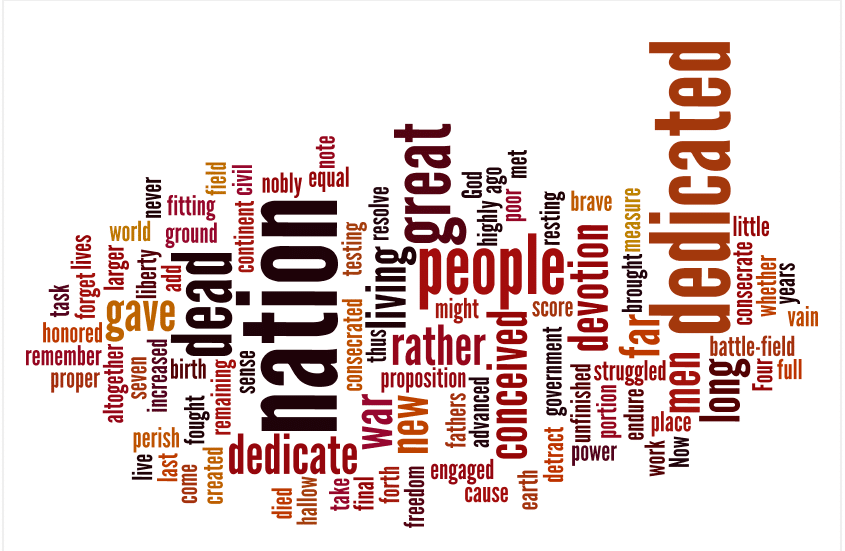
- Examine Lincoln’s word choices such as “dedicated,” “conceived,” and “consecrated,” and discuss how they convey stages of national purpose.
- Trace how Lincoln connects the founding ideals of 1776 to the struggle of 1863, and finally to the enduring future of American democracy.
- Analyze the rhetorical devices Lincoln uses—repetition, parallel structure, and contrast between life and death—to achieve balance and clarity.
- Reflect on the phrase “new birth of freedom.” Ask students what this renewal means in the context of the Civil War and in the broader history of the United States.
 Discussion Questions for Teachers
- How does the structure of the speech reinforce Lincoln’s vision of national rebirth?
- What connections do students draw between the language of the Declaration of Independence and the Gettysburg Address?
- How does Lincoln balance grief and hope in his address?
- What makes the closing phrase “of the people, by the people, for the people” effective as both a summary and a call to action?
- How can students use Lincoln’s structure and precision as a model for their own writing about complex ideas?
Conclusion
The Gettysburg Address endures because of its discipline and purpose. Lincoln’s structure moves from memory to action, from the founding to the present struggle, and finally to the renewal of the nation’s ideals. For teachers, guiding students through this movement helps them see how great writing communicates deep meaning through simplicity, structure, and moral clarity.


0 Comments