
Honoring Heroes: The 54th Massachusetts and the Monument That Tells Their Story
If you ever visit Boston, you might see a beautiful bronze monument right across from the Massachusetts State House. It shows rows of determined soldiers marching off to war, led by a young officer on horseback. This is the Robert Gould Shaw and 54th Massachusetts Regiment Memorial—a powerful tribute to one of the first African American regiments to fight in the Civil War.
But who were these brave men, and why is this monument so important?
The Story Behind the 54th Massachusetts
During the early years of the Civil War, African Americans were not allowed to serve as soldiers in the Union Army—even though many wanted to fight for freedom and the end of slavery. That changed in 1863 when President Abraham Lincoln issued the Emancipation Proclamation, which allowed Black men to enlist in the Union Army.
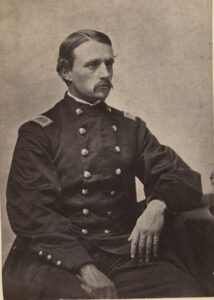
That same year, Massachusetts Governor John Andrew helped create a new regiment made up of African American soldiers: the 54th Massachusetts Volunteer Infantry. He chose Robert Gould Shaw, the son of a wealthy abolitionist family, to lead them. Famous abolitionists like Frederick Douglass and Lewis Hayden helped recruit men from across the North, Canada, and even the Caribbean.
On July 18, 1863, the 54th led a heroic but deadly attack on Fort Wagner in South Carolina. Many of the men, including Colonel Shaw, were killed in the battle. Even though the fort wasn’t captured, the bravery of the 54th changed minds across the North. Their actions helped encourage the enlistment of over 180,000 Black soldiers in the Union Army.
One of the heroes of that battle was Sergeant William H. Carney, who, even while wounded, protected the regiment’s flag. He became the first African American to receive the Medal of Honor, the nation’s highest award for bravery.
The Monument in Boston
Years later, artist Augustus Saint-Gaudens was chosen to create a memorial for the 54th Massachusetts. He spent almost 14 years working on the design. He used 40 different African American men as models to capture the faces of the soldiers, making sure they looked realistic and respectful.
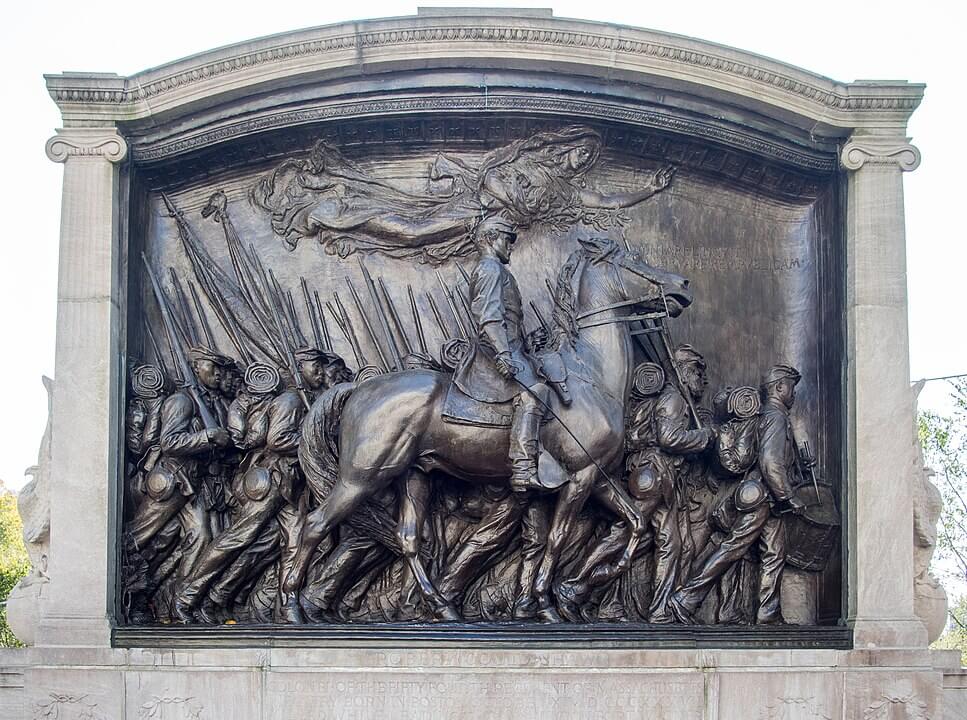
The memorial was finally unveiled in 1897 and shows the 54th marching down Beacon Street in Boston, heading off to war in 1863. It reminds us of their courage, sacrifice, and the impact they had on American history.
Classroom Ideas: How to Use This Story in Your Lessons
Here are some ways to bring the story of the 54th Massachusetts into your classroom:
- Primary Source Analysis: Examine the monument through photographs or, if possible, take a virtual tour or visit in person. Compare it with other Civil War monuments.
- Art and History Connection: Discuss how art tells stories and honors people. Why did the artist choose to show the soldiers marching instead of fighting?
- Literature Link: Pair this history with reading selections like “Glory” (a film about the 54th), or Civil War letters and speeches.
- Writing Prompt: Ask students to write a journal entry from the perspective of a member of the 54th Massachusetts on the day of the Fort Wagner assault.
- Research Projects: Assign small groups to learn about people like William H. Carney, Robert Gould Shaw, Frederick Douglass, or Augustus Saint-Gaudens.
Guiding Questions: Thinking Like a Historian
When you look at an image of the 54th Massachusetts Monument, think about these questions:
- What do you notice first about the monument?
- Why do you think the soldiers are shown marching instead of in battle?
- How does the artist show the emotions or determination of the soldiers?
- What message do you think this monument is trying to tell people today?
- Why is it important to remember and honor the 54th Massachusetts Regiment?
The story of the 54th Massachusetts Regiment teaches us about bravery, equality, and the fight for freedom. These soldiers helped change the course of the Civil War—and American history. By learning their story, we remember the courage of those who fought not just for victory, but for justice.
So next time you’re learning about the Civil War, don’t just study battles and generals—remember the 54th, and how ordinary people made an extraordinary difference.


0 Comments