November 2009

Civil War era Presidential Elections

by Jim on November 21, 2009

In this season of elections, I thought it would be interesting to share a website on Civil War era elections.

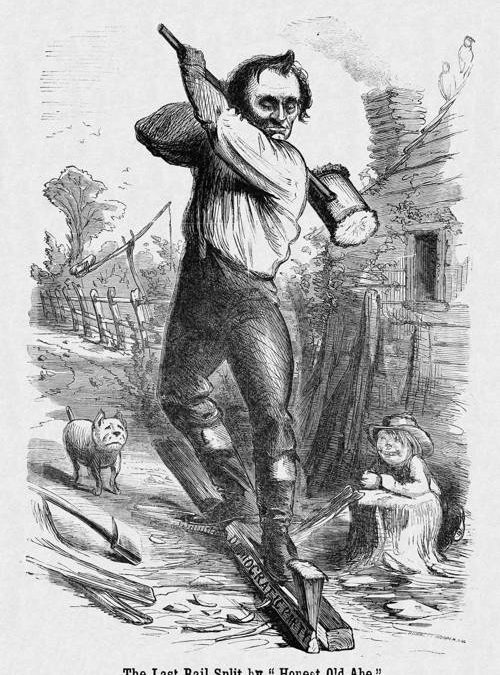
Harper’s Weekly has created a website for researching historical elections from 1860 to 1912. According to the website, the Presidential Elections page features political cartoons from several different digital resource centers such as Harper’s Weekly, the Library of Congress and Vanity Fair. The website also “provides explanations of the historical context and images of each cartoon, campaign overviews, biographical sketches, a review of the era’s major issues, and other valuable information.”

Let’s take a moment to explore the 1860 election between Lincoln, Douglas, Breckinridge and Bell. First, each election contains four sections: Overview, Cartoons, Biographies and Events. From here you can learn about the events leading up to to the 1860 election, how the Democratic party split, the Union Constitution Convention, the Republican Convention and the Campaign.

One of the greatest part of this site for teachers are the political cartoons. Let’s look at one and see how you can use it in your classroom.


The above image shows Abe Lincoln as a rail-splitter and is intended to appeal to the average voter. Before giving your students the full description of the cartoon, ask them to tell you what they see, what do they think is going on in the cartoon, what does the little child represent and why are the words “Democratic Party” listed on the rail?

You can then follow up by reading them the complete description: “In order to appeal to average voters, Republicans emphasized the poor, hardworking origin of their candidate through the myth of Abraham Lincoln as a rail-splitter. This cartoon in the Wide-Awake Pictorial plays on that image by joking that the last rail he split is th Democratic Party in 1860, which divided into the Northern and Southern Factions.”

Then, have your students think about presidential campaign ads or commercials they have seen recently. Do any of those ads try to appeal to the average voter by making the candidate look like every hardworking American? I think so and can name a few but let me know what your students come up with as you review these cartoons.

Until next time….

{ 0 comments }

Image of Lincoln at Gettysburg

by fifer1863 on November 19, 2009

Since I have posted on The Gettysburg Address in the past, I thought I would share this USA Today headline article about a “new” image of Abe Lincoln at Gettysburg being found at the Library of Congress.

The story discusses how an amateur historian was looking at photographs of the famous Gettysburg Address and found Lincoln in his famous top hat riding a horse to the speaker’s stand.

You can read the entire article HERE.

Here is a close up of the photo from the article showing what appears to be Lincoln

Photo from USA Today.

I have posted before about using photographs in your classroom. The historian in the article had researched the events around the Gettysburg Address and was simply looking at photographs and made a terrific discovery. You and your students can do the same thing in your classroom. Who knows, you may be the one to find the next photo of Lincoln or other famous Civil War figure.

Researchers advocate instructional approaches that engage students in the processes of doing history (Friedman, 2005). This process includes building historical knowledge through the use of primary sources, conducting historical inquiry, and encouraging students to think historically. As part of this process, students must be active learners, by seeking answers rather than waiting for them when engaging in the analysis of primary sources. The reason for this is that the process of engaging in historical thinking is more than simply absorbing information; instead it requires seeking out answers to questions (Friedman, 2005). While viewing a primary source, students will examine the historical document and then construct a narrative based on that document. Through the process of constructing this narrative, students have begun to develop inquiry skills that they will be able to use throughout their life (Wineburg, 2001). According to VanSledright (2002), children as young as seven and eight years old are capable of thinking historically.

Good luck and have fun exploring those photos.

——————————————————–

References:

Friedman, A. (2005, May). Using digital primary sources to teach world history and world geography: Practices, promises, and provisions. Journal for the Association of History and Computing, 8, Retrieved October 2005, from http://mcel.pacificu.edu/jahc/JAHCVIII1/articles/friedman.htm#037

VanSledright, B. (2002). In search of America’s past. New York, NY: Teacher’s College Press

Wineburg, S. (2001). Historical thinking and other unnatural acts. Philadelphia, PA: Temple University Press.

{ 1 comment }

The Complete Gettysburg Guide

by Jim on November 10, 2009

I recently received a copy of The Complete Gettysburg Guide by J.D. Petruzzi and Steven Stanley and I wanted to share my thoughts on the book.   To begin, this is by far one of the best guides to the Battle of Gettysburg that I have read.  In addition to detailing the three days of the Battle of Gettysburg, this guide also provides the reader information on events related to the Gettysburg Campaign such as the Battles of Hunterstown and Fairfield.  Additional sections of The Complete Gettysburg Guide include tours of various historical sites within the town of Gettysburg, the Soldiers’ National Cemetery, Gettysburg’s Evergreen Cemetery, rock carvings on the battlefield (my personal favorite) and tours of different Battlefield Hospital sites.

Throughout the guide, there are hundreds of photographs ranging from original photographs taken shortly after the battle to full-color photographs that provide the reader with a visual representation of the narrative text.  In addition to the photographs, the Guide contains 60 highly-detailed maps by Steven Stanley.  These maps help the reader to better understand how Union and Confederate troops were positioned or how a particular attack occurred.  These maps (see sample below) are rich in detail and even include a small clock to show the approximate time the event occurred.

sample map image from The Complete Gettysburg Guide Website

The Guide, which took approximately two years for the author to write, is rich in details, facts, first-person accounts and human interest stories from the battle.  Additionally, throughout the book are many “Did You Know” boxes that greatly supplement the text by providing interesting facts about different parts of the battle or the town of Gettysburg.  Finally, in addition to detailed driving directions, The Complete Gettysburg Guide provides map coordinates for many locations on the battlefield (such as the rock carvings).  So, now you can pre-load your portable GPS or even plug the coordinates into Google Earth and find the precise locations on the battlefield.

I also sent a few questions to Mr. Petruzzi about the book and I thought I would share some of that interview with you:

Question:  How did you get interested in the Civil War and Gettysburg in particular?

J.D. Petruzzi: I took my first trip there as part of a class trip in the 6th grade.  So Gettysburg was my first introduction to the Civil War.  After that I became very interested in American history, especially the CW, Indian Wars, Colonial period, etc.  Gettysburg was always my primary interest because it’s close to my home, and my cavalry interest was fed by the campaign – great stuff with Brandy Station, Buford opening the Gettysburg battle, and the actions along the retreat.  It has always held the greatest interest for me, although over the decades I’ve studied just about anything and everything related to the CW.

Question:  What is your favorite part(s) of the Gettysburg Battlefield?

J.D. Petruzzi: The first day’s field for sure, since it’s the least visited and least understood.  Of course I love the areas of the cavalry actions – South Cavalry Field, East Cavalry Field, Fairfield, Hunterstown.  I’ve long enjoyed spending hours in the National Cemetery.  I also love Little Round Top – like everyone else, I enjoy spending “thinking” hours up there.  I also really enjoy the monuments and spending a lot of time looking them over very carefully.

Question:  How do you think teachers can use your book and website to teach about the Civil War?

J.D. Petruzzi: The campaign overview gives a good, capsule view of the campaign in general.  But the book, in it’s entirely, teaches the lesson that there’s much more to Gettysburg than just the main battle and the main battlefield.  There’s a human cost to war – our tour of the field hospital sites hopefully shows that and shows just how much of the area the battle and resulting casualties touched (and more).  The rock carvings done by veterans demonstrate that it was important to the participants to be able to return to the field and mark for all eternity what spots were emblazoned on their memory.  And we hope the personal vignettes of the main battle tour give visitors an idea of some of the personal struggles and heroic deeds by participants – just a few of many.  Large battles and campaigns are comprised of the deeds of individuals – the whole is a sum of its parts, in other words.  Pickett’s Charge is seen as a massive, 13,000-man charge – but each man in the line was concerned with what was going on in his immediate space; and chances are that he was marching alongside his brother, friend, neighbor… hopefully the visitor comes away with a sense that Gettysburg, like all other conflicts, was very personal for each participant.

Mr. Petruzzi is also the author of the Hoofbeats and Cold Steel Blog

I highly recommend that you purchase a copy of The Complete Gettysburg Guide to add to your collection.

As part of my review, I also received a copy of The New Civil War Handbook by Mark Hughes that I am going to give away.  I plan to write a review of this book next.  So to enter to win this book, simply leave a comment on this post by November 20th and I’ll have one of my kids pick a random entry.

{ 4 comments }

Google Maps and Gettysburg

November 7, 2009

Thanks to the Ten Roads Blog (actually done by a high school student) for sharing a link to a very cool website (more of a mashup really) that uses Google Maps and photos. The Encounter at Gettysburg page is being developed by Chuck Kann and incorporates Google Maps to allow visitors to locate monuments, farm [...]

Read the full article →